Footprint rationalization
If we close some DCs, which ones?
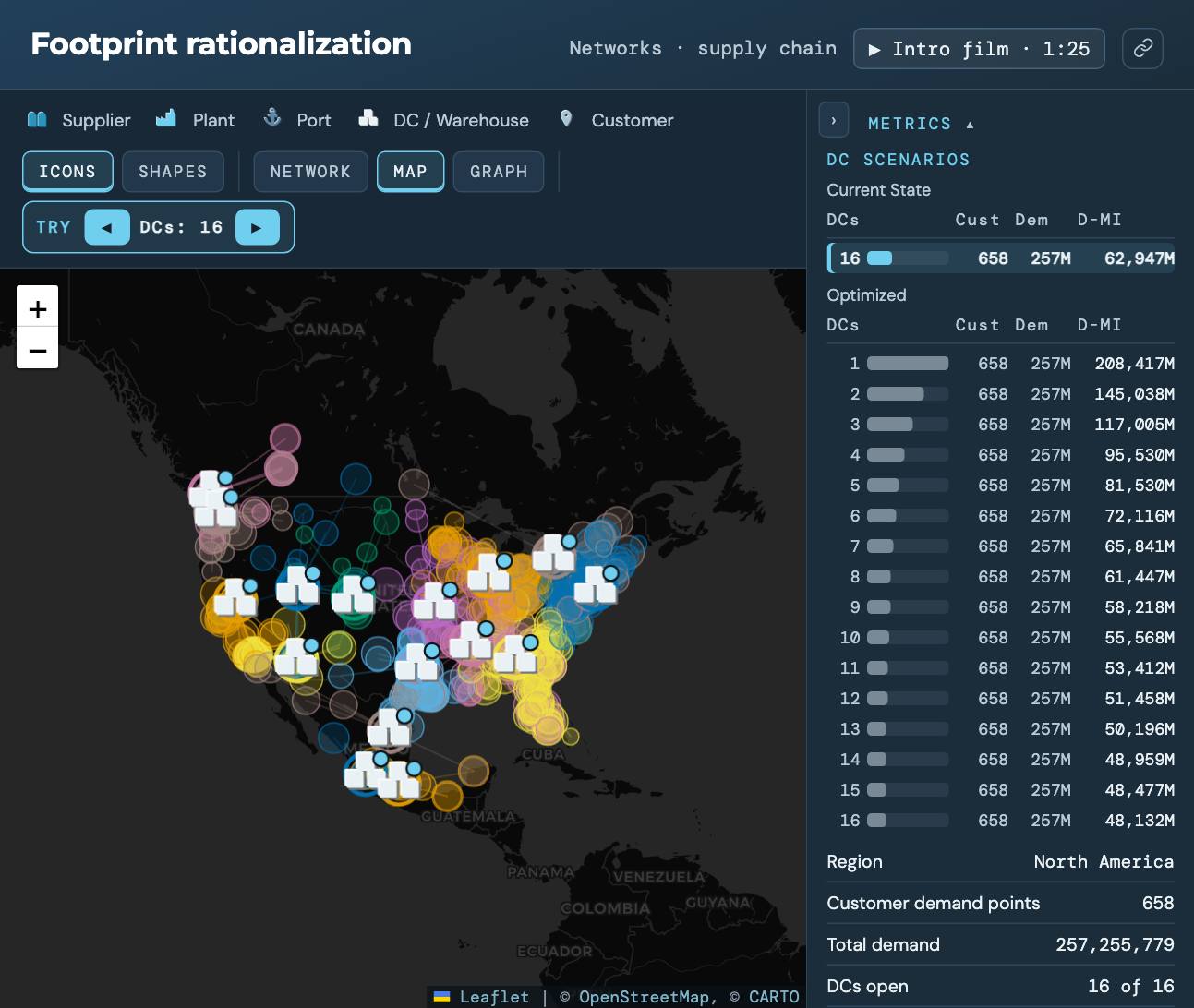
A North American network of 658 customer points served from sixteen DCs. It opens on today’s footprint, and you consolidate from there.
The question it answers
Networks grow by acquisition and by opening a DC for one big customer at a time. Years later nobody is sure every building still earns its place. Footprint rationalization asks which DCs you could close, and how much farther product would have to travel if you did.
What you’ll see
The sixteen DCs and their customers on a map. The results column starts with the current state, then shows the same sixteen DCs with customers re-assigned to their best DC, which is the saving you get without closing anything. Below that is the best answer at every count from sixteen down to one. The column on the right lists which DCs stay open and which close.
What to change
- Step the count down and watch which DCs close first.
- Click a DC to make it optional or pin it open.
- Open GRAPH to find the elbow on the score curve.
Where it leads
Distance is only one side of a consolidation. Fewer DCs usually means less stock in total, and how many distribution centers do you need? covers both sides. The VinLogic case study shows a network model used week to week.
Run Footprint rationalization
It opens in the Sandbox with sample data. No signup, no install.
Run it →Or see all eleven network demos.