Safety stock
Where in the network should safety stock sit, and how much?
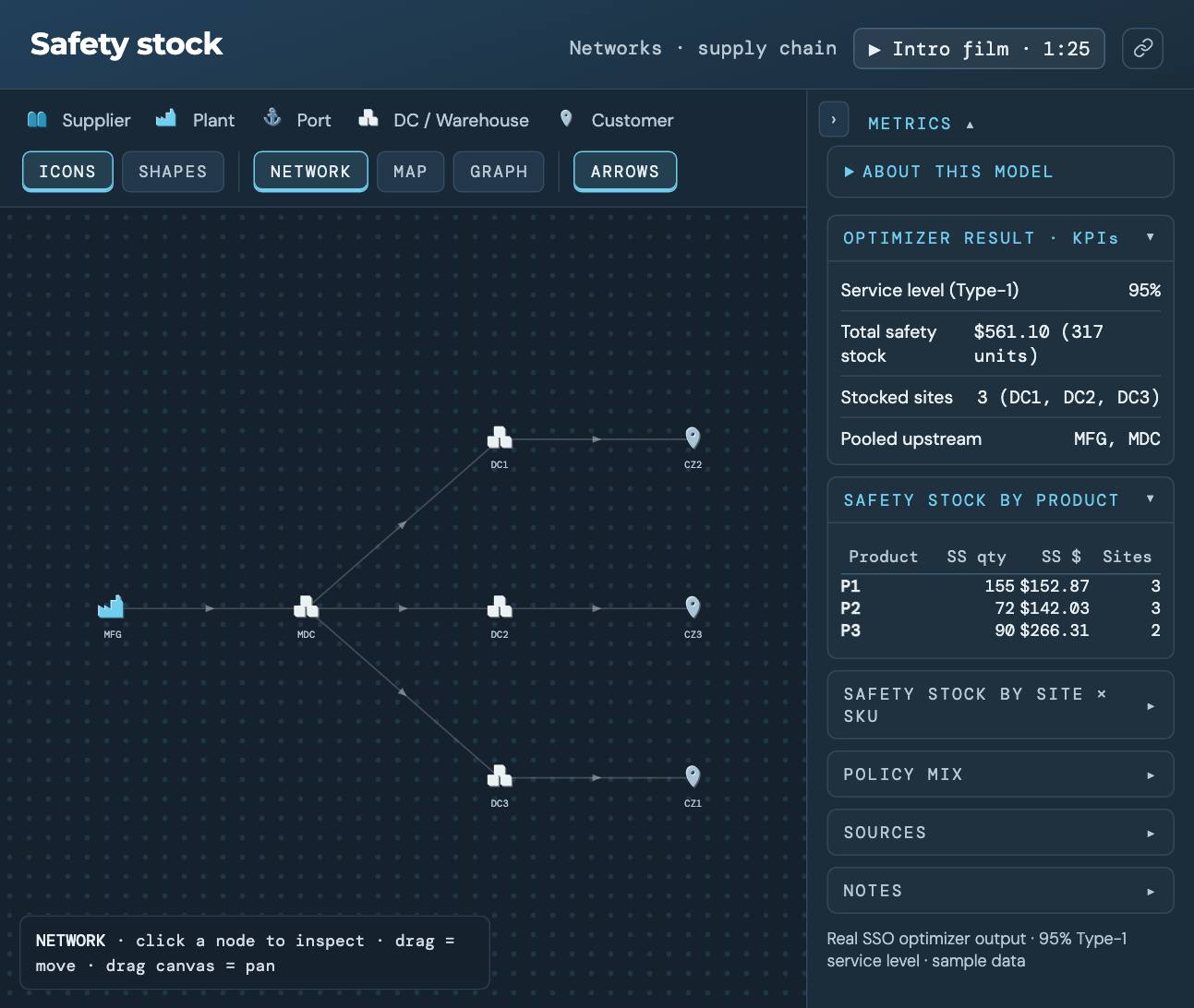
A plant feeds a central DC, which feeds three regional DCs and their customer zones. Three products, one service target, and one question: where should the safety stock sit?
The question it answers
Holding safety stock at every tier is the default in many networks, and it’s usually more stock than the network needs. The central DC can pool variation from all three regions, or the regional DCs can hold it close to customers. The answer depends on lead times, costs and how demand varies at each point.
What you’ll see
Saved output from a multi-echelon safety stock optimizer. The results column breaks the answer down by product and by site, with the policy used at each site. In this network the optimizer puts all of the safety stock at the three regional DCs and none at the plant or the central DC, which pool upstream. The highest-value product takes the largest share of the budget.
What to change
- Open each results section and compare the products.
- Click a site to see its record.
- Ask the assistant why the plant and the central DC hold none, or what the policy types mean.
Where it leads
Safety stock by formula or by simulation covers how to test an answer like this over time. The postponement case study is a real network where the same kind of question was settled product by product.
Run Safety stock
It opens in the Sandbox with sample data. No signup, no install.
Run it →Or see all eleven network demos.