The line
This is a high-speed bottling line with five machines: Filler, Capper, Labeler, Case Packer, and Palletizer. It runs 90-day production cycles at a nominal rate of 60 bottles per minute per machine, and historian data is available for all machines.
The production team tracked OEE at 54.3%. Multiplying the five machines’ availabilities predicts 46.7%, because that math ignores the buffers between them.
Two failure modes that looked the same
Two failure modes appeared nearly equal in the Loss Tree:
Labeler Misalignment
Infrequent, longer stops. The Loss Tree says to fix this first.
Filler Micro Stop
Frequent, short stops. The Loss Tree gives it about the same priority.
The direct losses are similar, so your Pareto ranks them equally. Most CI teams would fix the Labeler first because it's the bigger single event.
What the simulation finds
ReliaSim modeled the full line with interrupt distributions fitted in ReliaStats. The method behind it has a published validation on a real plant. We then removed each failure mode one at a time and re-ran the whole line.
What each fix actually recovers
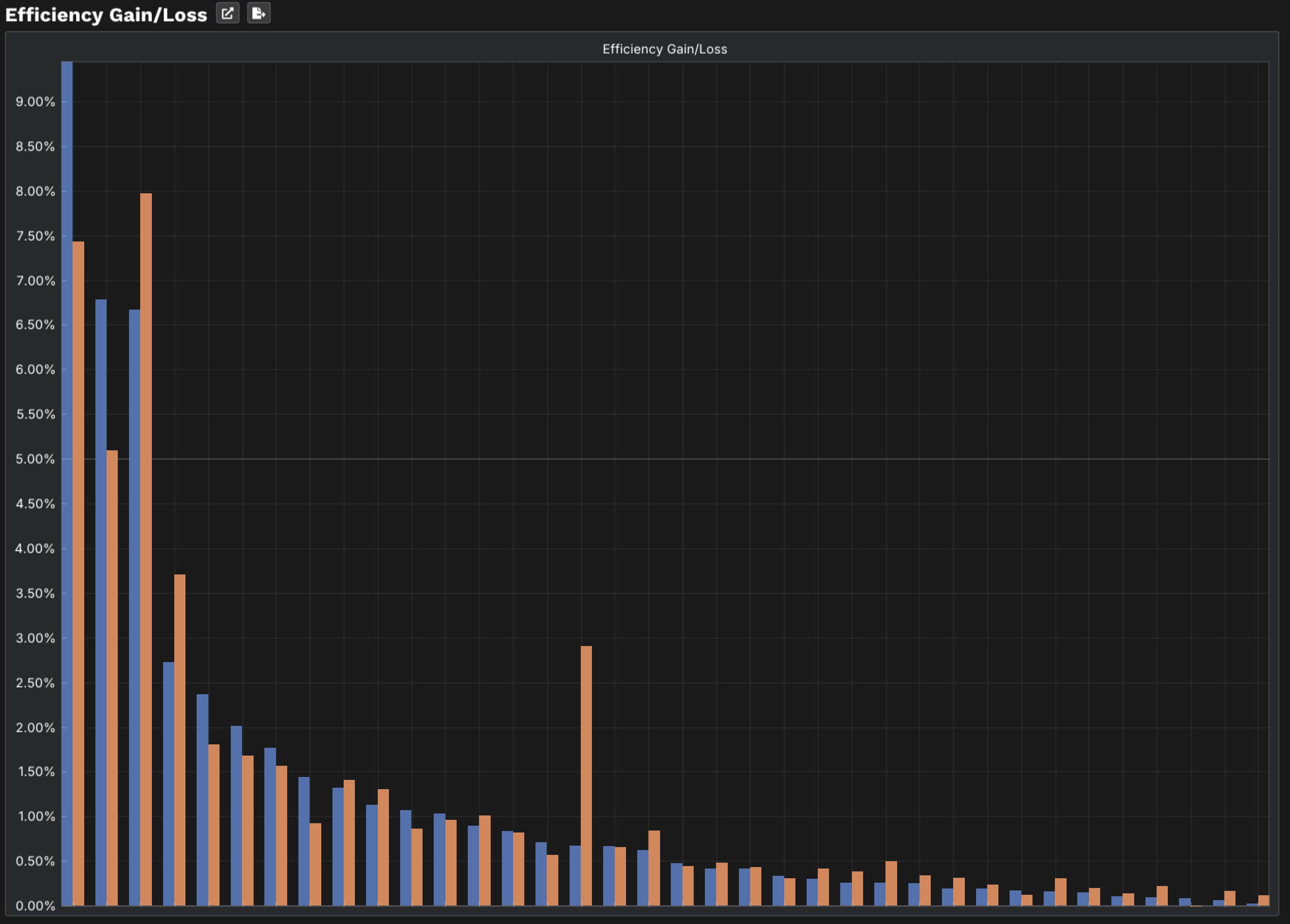
Labeler: fix the big event
You recover less than you lost. The line absorbs the rest.
Filler: fix the micro stops
This fix recovers 62% more. Removing it also removes the losses it was cascading into the machines downstream.
The Labeler fix meant $400K of alignment tooling. The Filler fix was a $50K intervention (automated jam clearing). On a $50M/year line, following the Loss Tree instead of the simulation leaves $1.5M on the table.
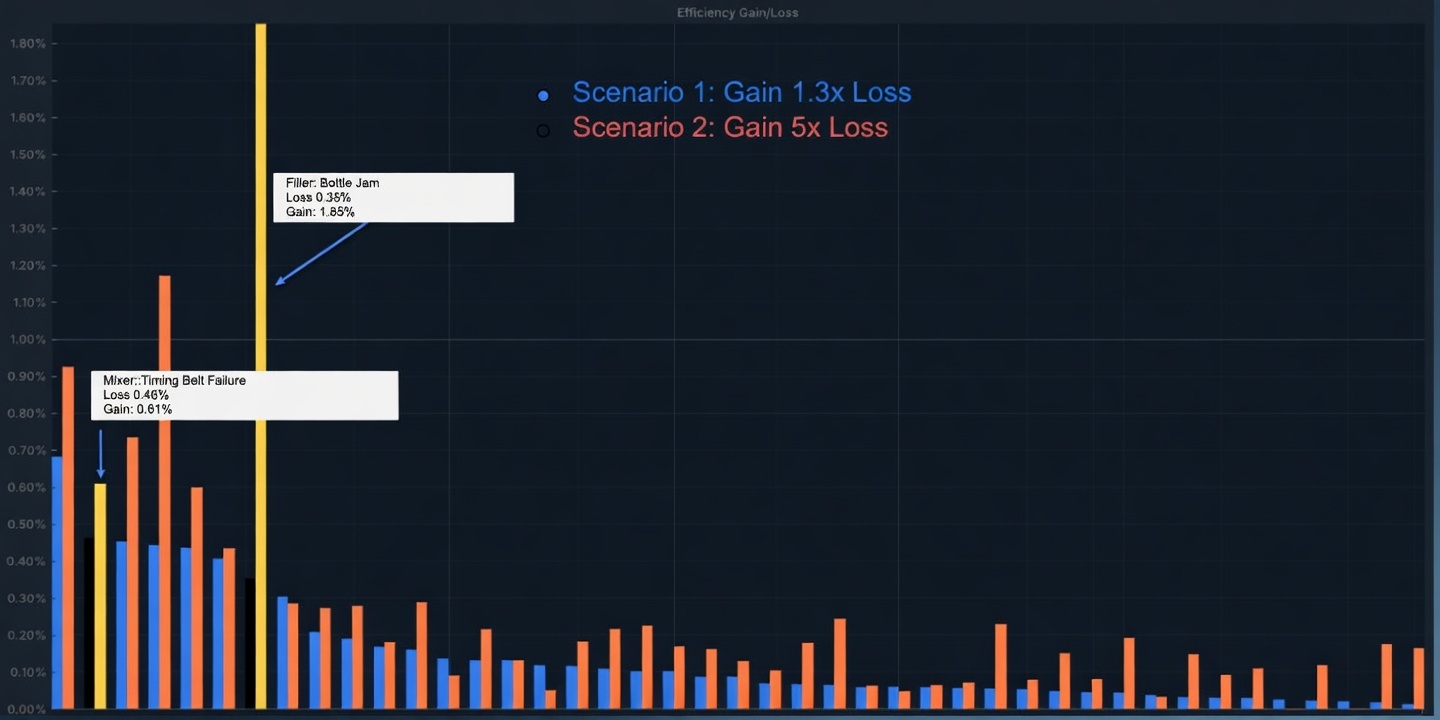
Labeler_Misalignment reads Loss 6.67%, Gain 4.85%. More in
Which of the six big losses to fix first.
Why the same downtime can cost different amounts
Two weeks with the same 120 minutes of downtime
Two failure modes, one production week each. Running Stopped
Each jam lasts one minute. It’s drawn at a minimum width so it stays visible at this scale.
What the loss report records
The two records are identical, with the same tier and the same priority.
A simplified example, not a simulation result.
Each of the 120 one-minute micro stops blocks and starves the machines around it. The damage lands as idle time on the Labeler, Case Packer and Palletizer rather than under the Filler’s name (see line OEE vs machine OEE).
"Those 120 one-minute interruptions are creating cascading problems throughout your system that don't show up under the original problem's name. When you eliminate them, you often recover 180–220 minutes of uptime — significantly more than the original downtime suggests."— Tom Lange, 36 years in manufacturing R&D
Other plants that find the same thing
A specialty olive packer simulates a full harvest year of its plant and finds 15% more throughput by testing scheduling rules before buying equipment. At a major food manufacturer, a model built to confirm that conveyors would beat manual carts from dryer to packaging shows productivity would fall. Across forty models, the return comes to $5 million, with $3 million of it from scrapping projects that would have been counterproductive.
Related: Which Loss to Fix First · The Hidden Factory · Starved vs Blocked · Why Simulation Belongs in the Capital Plan · All guides
A free line assessment, this fall
Bring one question about your line. We model it on your own data and send back a two-page readout in about five business days.
Apply for a free line assessment →Or explore the Sandbox first, with no sign-up.